A robot’s sale price is only one part of its cost. The bill also includes batteries, sensors, software, training, repairs, and the time people spend keeping the system running.
If you want robots to reach more homes, schools, farms, and small factories, the practical target is lower ownership cost. That starts with simpler jobs, shared hardware, and clear limits.
Quick read
- Match the robot to one useful task before adding extra features.
- Lower cost through repeatable parts, simple software, and local repair.
- Measure the full cost over the robot’s working life, not the purchase price alone.
Start with the task, not the robot
A machine built for one job can use fewer motors, sensors, and software tools than a machine expected to do everything. A warehouse cart that carries boxes needs different hardware from a robot arm that sorts small parts.
That choice affects the whole design. A cart may need wheels, obstacle sensors, a battery, and a charging system.
An arm may need several joints, position sensors, a gripper, and a fixed work area. Paying for hardware that a task never uses makes the robot harder to buy and harder to maintain.
The first step is to describe the job in plain terms. State the object’s weight, the distance it must move, the work speed, the hours per day, and the places where a person must take over. Those details give builders a limit to design around.
Use parts that can be repaired
A low purchase price does little for a small company if one failed motor puts the robot out of service for weeks. Makers can lower that risk by using standard motors, connectors, batteries, cameras, and computers where the task allows it.
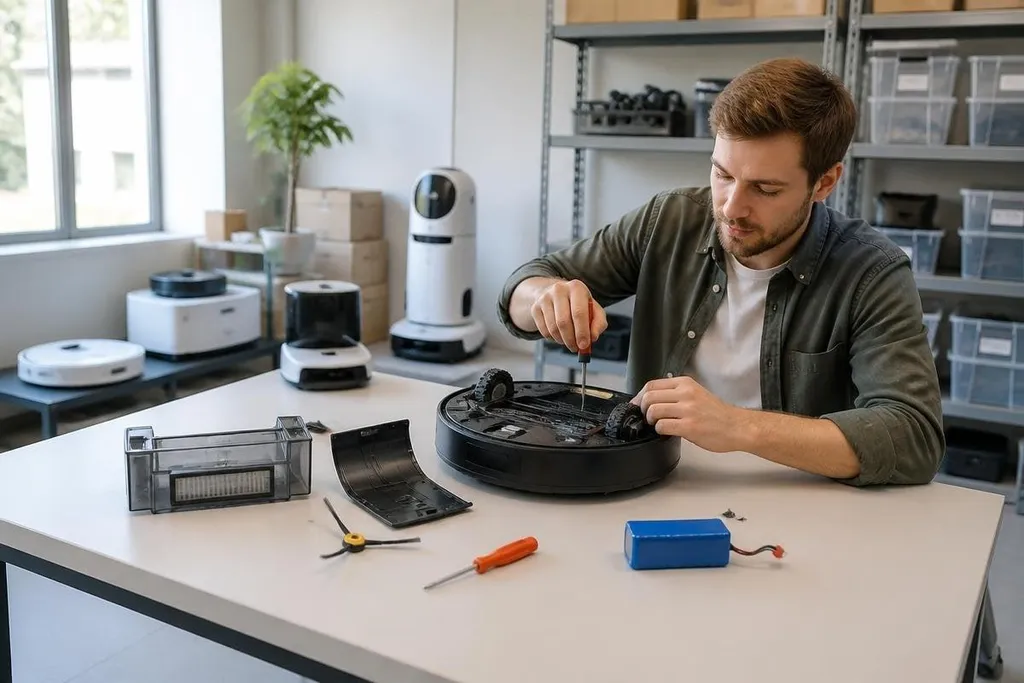
Repair also depends on access. A technician should be able to replace a wheel, cable, sensor, or gripper without sending the whole robot back to the factory. Clear service instructions matter as much as the part itself.
Software needs the same treatment. A robot that runs on common tools and documented interfaces gives owners more ways to fix faults, change a task, or find local help. Closed systems can work, but their long-term cost needs a clear explanation before purchase.
A machine’s purchase price is only one part of the bill. Robotics reporting from Robot24.com can put a company’s cost claims beside the machine, task, and project details, giving you a clearer basis for deciding which expenses can be shared.
Share the expensive parts
Not every customer needs a full robot fleet or a private training system. A school could share a robot between classes. Several small factories could use one mobile platform through a service company. A repair center could hold spare parts for a region rather than each owner keeping a full stock.
Shared use only works when the robot can move between tasks without long setup time. Software settings, tool changes, charging, safety checks, and transport all add work. The savings need to survive those steps.
Manufacturers can also offer a basic robot with optional hardware. A buyer might start with a camera and a simple gripper, then add a second arm or a heavier battery after the first task proves its value. This keeps early spending tied to a real need.
Price the whole working life
The useful number is the cost of getting the job done.
That includes the robot, installation, training, electricity, software fees, replacement parts, downtime, and the person who checks the system.
A cheaper robot may cost more if it needs frequent manual recovery. A higher-priced machine may make sense if it runs longer between service visits and uses parts that local technicians can replace. The comparison needs the same task, hours, workload, and service plan on each side.
For a small buyer, ask the seller to separate these costs. A clear quote should state what the robot does on its own, where teleoperation is needed, which parts wear out, and what support ends after the warranty.
A buying checklist
Use these questions before approving a robot purchase:
- Task limit: What single job will the robot do first?
- Payload and reach: What does it lift, carry, or handle, and how far?
- Runtime: How long does it work before charging or a battery change?
- Human recovery: Who takes over when the robot stops?
- Repair access: Which parts can a local technician replace?
- Full cost: What will the robot cost across its planned service life?
The opposing view is that extra hardware gives a robot more uses later. That can be true, but unused capability still adds weight, price, software work, and repair points.
I’d spend the first budget on a robot that does one job reliably, with repair parts and service terms written down. Affordable robotics will come from machines people can keep running, not from a low price printed on the first page of a quote.